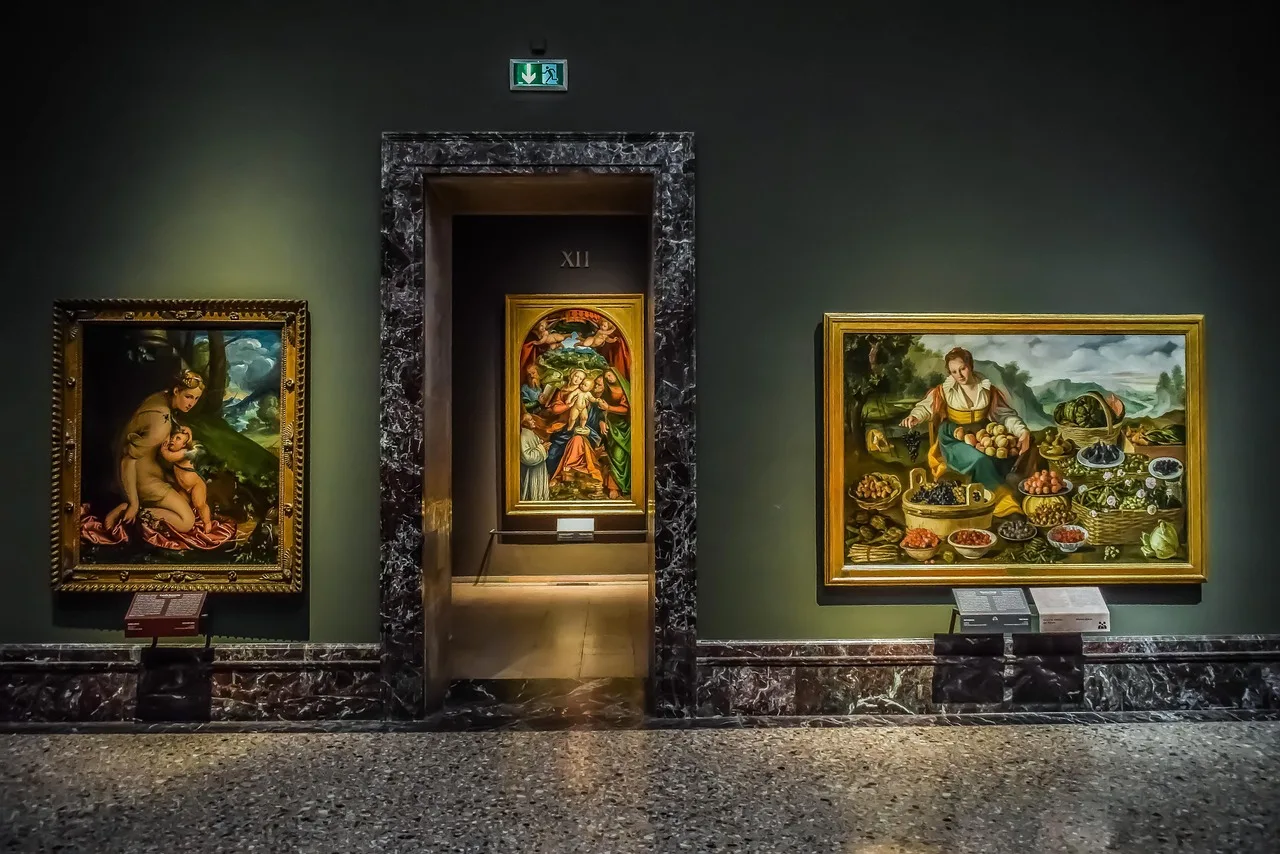
Reviews
Part of Museum and exhibition reporting: a field guide
Museum, gallery, and exhibition coverage compared
Museum, gallery, and exhibition coverage compared by reporting object, evidence, timing, institutional claims, visitor experience, and suitable story form.
What to take away
- A museum story concerns an institution; an exhibition story concerns a bounded presentation.
- "Gallery" may describe a room, a public institution, a nonprofit space, or a commercial business.
- Collection reporting needs records that a single visit cannot supply.
- Label analysis tests interpretation, while installation criticism tests relationships in space.
- The best format follows the reporting object, evidence, and publication timing.
Culture desks often treat "museum," "gallery," and "exhibition" as one thing. They are not.
Compare three named examples: The Metropolitan Museum of Art (a museum), Gagosian (a commercial gallery), and the Whitney Biennial (an exhibition at the Whitney Museum of American Art). Met coverage needs collection records; Gagosian coverage needs representation and sales context; Whitney Biennial coverage evaluates a bounded presentation.
A museum organizes many exhibitions, preserves collections, conducts research, and runs education or public programs. A gallery may be a room inside that museum or a separate organization.
An exhibition is a selected, arranged presentation with a place, duration, argument, and credited makers.
The National Park Service publishes a three-part museum handbook that runs from collections care through records to collections use, covering preservation, documentation, exhibits, and research access. That breadth is a warning for writers: a review of one temporary show cannot by itself support a verdict on every institutional function.
Compare the reporting objects
Central question
- Museum institution
- How does the organization carry out a public and collections role?
- Public or nonprofit gallery
- How does the program serve its stated artistic and public purpose?
- Commercial gallery
- How are artists represented, exhibited, promoted, and sold?
- Temporary exhibition
- What argument does this selection and installation make?
- Permanent collection display
- How does a continuing arrangement frame a collection?
Strong evidence
- Museum institution
- Policies, records, budgets, interviews, collections work, repeat observation
- Public or nonprofit gallery
- Program history, governance, selection process, access, artist and audience reporting
- Commercial gallery
- Artist roster, exhibition record, market context, disclosed relationships
- Temporary exhibition
- Firsthand visit, labels, object records, catalog, interviews
- Permanent collection display
- Repeat visits, display history, acquisition and provenance records
Common mistake
- Museum institution
- Judging the institution from one exhibition
- Public or nonprofit gallery
- Assuming the word "gallery" defines its model
- Commercial gallery
- Ignoring the business relationship
- Temporary exhibition
- Repeating the curatorial premise as a conclusion
- Permanent collection display
- Treating "permanent" as unchanging
Choose the right form
Review
A review evaluates a completed exhibition through firsthand experience. It needs close description, clear criteria, and enough context to make the judgment intelligible. It should identify the visit if objects, galleries, or technology may change.
Choose the right form
Is the exhibition completed and experienced firsthand?
Review
Is it about an event, policy, or decision?
News report
A report covers an opening, closure, appointment, acquisition, restitution claim, protest, policy, grant, labor dispute, building project, or loan decision. It needs documents, timelines, affected voices, and a fair chance to respond. A walkthrough can add observation but cannot replace reporting.
Preview
A preview tells readers what is planned before the public can experience the finished presentation. It may use studio visits, installation access, interviews, or advance material. Its language must not imply that the writer reviewed a completed show.
Institutional profile
A profile asks how a museum or gallery works across time. It may examine mission, leadership, finances, collections, programming, labor, audience, or place. One photogenic room is not a substitute for institutional evidence.
Label or catalog analysis
This form examines how an exhibition names, attributes, translates, contextualizes, and connects objects.
Smithsonian Libraries and Archives record for Beverly Serrell's Exhibit Labels: An Interpretive Approach describes a guide covering visitors, interpretive labels, current scholarship, and practical examples. A label story should quote exact wording in a legally and editorially appropriate amount. It should identify its location and date and distinguish shortened wall text from a fuller catalog argument.
Compare the evidence burden
An exhibition review can support statements like "the final room places the two portraits opposite one another" after direct observation. It cannot establish why a lender declined a request unless a responsible source or record says so.
Match verbs to evidence
Verb type
- Displays, places, lights, separates
- Direct observation tied to a visit
- States, describes, attributes
- Identified label, catalog, record, or speaker
- Owns, borrowed, acquired, returned
- Collection and loan records checked
- Suggests, frames, diminishes
- Analysis supported by described choices
- Proves, represents, transformed
- Wider evidence usually needed
Required evidence
- Displays, places, lights, separates
- States, describes, attributes
- Owns, borrowed, acquired, returned
- Suggests, frames, diminishes
- Proves, represents, transformed
An institutional report may document a three-year change in acquisitions. But it cannot tell readers how a sound installation felt on a specific afternoon without an observed visit.
Match verbs to evidence:
- Displays, places, lights, separates:direct observation tied to a visit.
- States, describes, attributes:an identified label, catalog, record, or speaker.
- Owns, borrowed, acquired, returned:collection and loan records checked for current status.
- Suggests, frames, diminishes:analysis supported by described choices.
- Proves, represents, transformed:high-burden claims that usually need wider evidence.
Handle mixed assignments
Some stories cross categories. A review may uncover a mislabeled object. A building report may reveal that a promised step-free route is unfinished. A commercial gallery profile may include a critical account of its current show. Set the primary question and assign each secondary claim the evidence it needs.
Disclose conditions that readers would use to judge independence: private previews, travel support, hospitality, prior employment, collecting, personal relationships, and commercial ties. The disclosure does not replace fair reporting.
A quick assignment test
Before commissioning, complete this sentence: "This story will establish whether..." Then ask:
Quick assignment test
- Is the subject an institution, presentation, room, object, or decision?
- Does the writer need firsthand experience, records, interviews, or all three?
- Can the central claim be established before opening day?
- Which conditions could change after the visit?
- What wording would overstate the available evidence?
The answers reveal whether the assignment should be a review, report, preview, analysis, or profile.
Common questions
Is every gallery a museum?
No. "Gallery" has several uses, including a room, public art organization, nonprofit venue, and commercial business.
Can a permanent display be reviewed?
Yes. Identify the version and visit date because objects, labels, and arrangements can change.
Is a catalog review the same as an exhibition review?
No. A catalog is a publication with its own authors, structure, and evidence. It cannot reproduce the spatial experience of an installation.
Which format is best for a disputed object label?
A reported analysis usually works best. Preserve the exact wording, check the underlying record, seek qualified views, and give the institution a chance to respond.