Guides
Heritage, archives, and public history reporting guide
How to report on heritage sites and archives: scope the question, map the evidence, read the place, interview with care, and correct claims at source.
What to take away
- Write a one-sentence research question naming the site, period, people and the decision now in play.
- Cite records by repository, collection, series, box and folder, plus item, creator, date and identifier.
- Match each claim to the record type that can carry it, and state what that record cannot show.
- Date every site observation, and treat a heritage nomination as an argument made for a purpose, not a verdict.
- Correct a wrong name, date or attribution everywhere it appears, not only in the passage you first noticed.
Public history is made from buildings, records, objects, memorials, tours and the choices institutions make about them. A reporter has to cover the past being described and the present system describing it.
Photo and credit
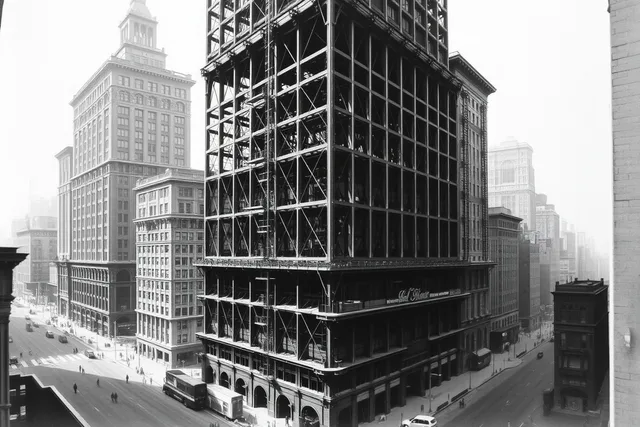
The photograph shows one room in one year. It says nothing about the size, arrangement or access conditions of the collections held there.
Set the scope
Start with a single research question. Name the exact site or collection, the location, the period, the people involved and the public decision at stake. "The history of the station" is not reportable. "How the 1964 waiting-room closure is described in the new exhibition" is.
List the terms that changed over time: place names, agency names, racial categories, occupations, boundaries. Keep historical wording where you need it to search or quote, then explain the term rather than letting it become the article's voice.
Build an evidence map
Different claims need different records. Match them before you start reading.
Match claims to evidence
Claim
- Construction date
- permits, contracts, dated plans
- Ownership
- deeds, tax files, probate
- Daily use
- diaries, photos, logs
- Public interpretation
- labels, scripts, tours
- Community effect
- resident accounts, maps, data
Useful evidence
- Construction date
- opening may differ
- Ownership
- legal vs practical control
- Daily use
- survival and memory uneven
- Public interpretation
- plans may differ from delivery
- Community effect
- no single witness represents all
Common limit
- Construction date
- Ownership
- Daily use
- Public interpretation
- Community effect
| Claim | Useful evidence | Common limit |
|---|---|---|
| Construction date | permits, contracts, dated plans, newspapers | opening and completion may differ |
| Ownership | deeds, tax files, probate, corporate records | legal and practical control may diverge |
| Daily use | diaries, photographs, logs, oral histories | survival and memory are uneven |
| Public interpretation | labels, scripts, tours, budgets, interviews | plans may differ from delivery |
| Community effect | resident accounts, maps, local records, data | no single witness represents everyone |
Record repository, collection, series, box and folder. Then item, creator, date, title and identifier. Add a rights note and the access date.
The National Archives' leaflet on citing its records asks for several elements. Another researcher must be able to find the same document.
Citation elements to record
- Repository, collection, series, box, folder
- Item, creator, date, title, identifier
- Rights note and access date
- Record item, file unit, series
- Subgroup, record group, repository
- Keep catalog description separate from digitized item
Keep the catalog description separate from the digitized item; they are different objects.
Read the place with the archive
Visit when it is safe and permitted. Note the route in, the boundaries, neighbouring uses, and materials. Note later additions, missing features, signs, and memorials. Note barriers and maintenance. Date every observation.
What to observe on site
- Route in, boundaries, neighbouring uses
- Materials, later additions, missing features
- Signs, memorials, barriers, maintenance
- Date every observation
- Compare written history with physical evidence
- Date and interpret physical traces
The National Park Service place-based research guide points researchers to site-specific history, local context, change over time, and conflict. It also points to National Register nominations, maps and photographs. A nomination carries a researched argument and a bibliography, but it was written for a purpose and a date.
Compare the written history with physical evidence. A blocked doorway, a shifted boundary, a replacement plaque or a worn path can show change that an official narrative plays down. Physical traces still need dating and interpretation before they mean anything.
Interview across memory and authority
Ask curators what was selected, archivists how the material is arranged, residents what changed, descendants what language and access they expect, and officials who controls the money. Explain the article and the consent terms before you record anyone's personal history.
Memory is evidence of experience and of later meaning. It is not a defective document, and it is not a timestamp. Check dates and public facts, then keep the narrator's account as an account.
Report absences without inventing causes
An archive reflects:
Why archives have gaps
- Creation
- Power
- Collecting
- Appraisal
- Preservation
- Description
- Restriction
- Chance
Explain the present stakes
Establish who owns the site or the records, who may enter, who is represented, who can request a change, and what decision is pending. Legal designation on its own does not bring funding, public access, restoration or protection from every alteration. Check what the designation actually covers with the body that made it.
Correct at the level of the claim
Fix names, dates, image identities, quotations, collection citations and historical conclusions in every location where they appear. A caption, a standfirst and a social post are separate places and each one needs the same fix. If new evidence changes an interpretation rather than proving an error, label the change as an update and say what prompted it.
Common questions
Is an archive neutral?
No collection is complete or context-free. Report how the material was created, selected, described and made accessible, and who did that work.
Can a plaque serve as a source?
Yes, for what the plaque states and how a site chooses to interpret itself. Its historical claims still need checking against other evidence.
Does a primary source prove a claim?
Not by itself. Identify the creator, purpose, date, audience and context, then read it against other records.
Should a reporter correct quoted historical language?
Preserve the wording where quotation is necessary, give the context, and avoid repeating a harmful term more often than the story requires.