Guides
How to Verify a US Gallery's Exhibition History Before You Write a Review
How to confirm a US gallery's claimed exhibition history, past shows, and artist roster using press archives, catalogues, and institutional records before you file a
What to take away
- A gallery press page is a claim, not a record. Confirm each show against a source outside the gallery.
- Exhibition catalogues, newspaper archives, and institutional press files are the fastest independent checks.
- Nonprofit galleries file annual reports and program lists with state charity regulators.
- Ask the press office for a dated release or checklist before describing any show.
- Provenance research answers a different questionwho owned a work, not whether it hung.
Why a Gallery's Own History Needs a Second Source
Galleries write their own histories. A roster page can list a 2019 solo show that was announced, then postponed, then folded into a group presentation. It can credit an artist with a two-person exhibition where they showed one drawing. None of that is fraud. It is marketing shorthand, and reviewers inherit it.
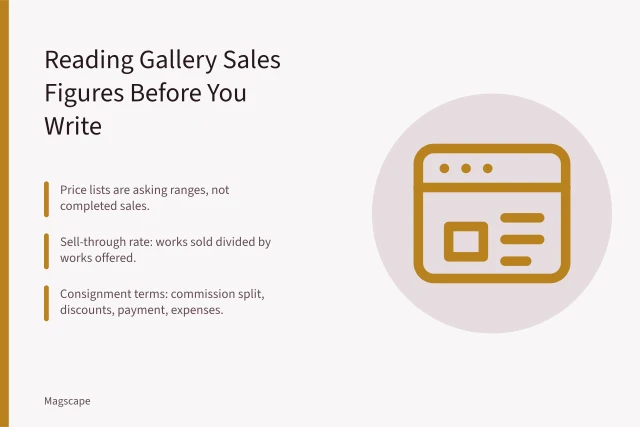
The same gap appears with commerce. A show can draw strong reviews and weak sell-through, and the gallery will still call it a success. If you plan to describe a show's commercial reception, learn to read the sales figures before you publish.
For background on how galleries represent artists and price work, the overview of the art gallery business model covers primary and secondary markets.
Match Every Claimed Show to Two Independent Records
Work through these steps for each exhibition you intend to review.
- Save the gallery's exhibition page. Capture the URL, the dates, and the artist list before the page changes.
- Check the artist's own CV, studio site, and any published monograph. Artists usually list solo shows accurately.
- Search the local newspaper and art press archive for the opening date and the printed show title.
- Look for a catalogue in WorldCat, a university library, or the artist's own records.
- Email the press office and ask for the original announcement. Keep the reply.
What Each Source Confirms
| Source | What it confirms | Access point |
|---|---|---|
| Exhibition catalogue | Title, dates, curator, checklist | WorldCat, library catalogs |
| Newspaper archive | Opening coverage, quotes, attendance | ProQuest, local library |
| Institutional press file | Release, images, run dates | Museum or university archive |
| State charity filing | Nonprofit programming and revenue | State attorney general |
| Artist CV | Solo and group show history | Studio site, gallery PDF |
Example: Checking a Claimed 2016 Solo Show
Suppose a gallery lists a 2016 solo show for an artist you are reviewing. Search the exhibition title as a phrase. If the only results are the gallery's own pages, treat the claim as unconfirmed.
Then read the artist's CV. If it lists a 2016 two-person show under a different title, the difference matters. Describe the work, not the gallery's version of the record.
Using Institutional and Government Records
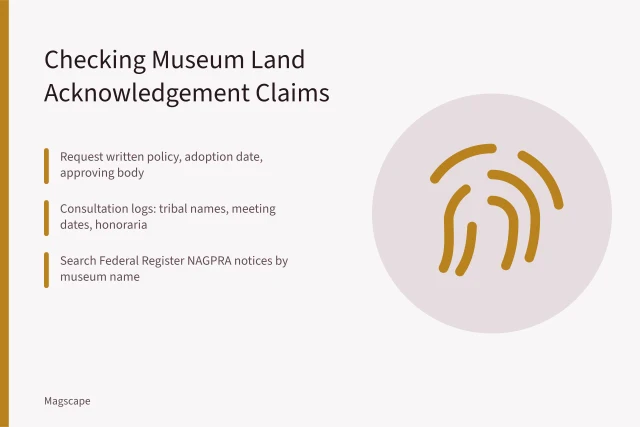
Nonprofit galleries register as charities. Many states require annual reports that list program activity and revenue. The Massachusetts Attorney General publishes guidance on charitable organization oversight that explains those filings. Similar offices exist in New York and California.
Federal grant records add another layer. Search the National Endowment for the Arts grant database by artist name. A fellowship confirms a funded period, though not a specific exhibition.
For object-level questions, the Getty Research Institute maintains provenance research tools that trace ownership across auction and dealer records. Use them when a review touches on where a work came from, not only where it hung.
What to Ask the Press Office
Every gallery has a press contact, even small ones. Send one clear email and request:
- A dated release with the exact show title and run dates.
- A checklist or image list naming artists and work counts.
- Confirmation of which works were loans and which were gallery inventory.
- A named contact who will answer follow-up questions on the record.
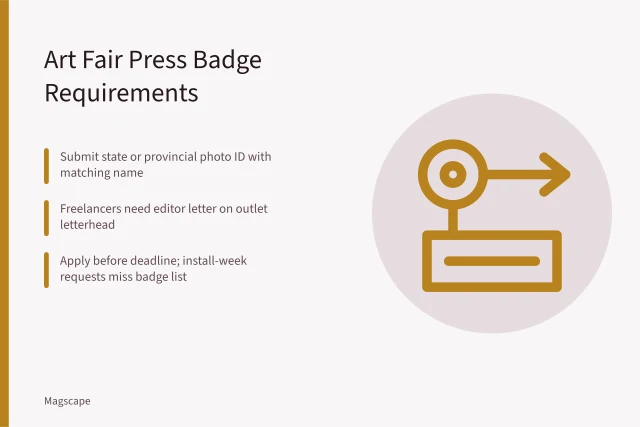
Galleries usually cooperate, since coverage helps them. If your reporting depends on fair access, review press accreditation requirements before deadlines pass.