Guides
How to Apply for a Canada Council Project Grant as an Arts Writer
How to apply for a Canada Council project grant as an arts writer, from eligibility and referees to provincial deadlines and the waiting period.
What to take away
- The Canada Council's Research and Creation component accepts applications in Canadian dollars from citizens, permanent residents and protected persons.
- Provincial deadline dates vary; confirm your province's listed date in the portal before building the workback.
- Prepare two referees early; an unconfirmed referee is the most common blocker.
- Use the waiting period to strengthen the writing sample and confirm a publisher or host for the proposed work.
The short version
An arts writer applies to the Canada Council through the online portal, not through a paper form. Choose the Research and Creation component, then add a project description, a CV and a writing sample. You must also name two referees who know your work. The portal uses Canadian dollars only. Eligibility follows the Council's rules on canada.ca: Canadian citizenship, permanent residency, or protected person status. Provincial deadlines vary, so check your own province's date first. The component is described on the Canada Council for the Arts program pages.
Stage by stage
The order matters because each step depends on the previous one.
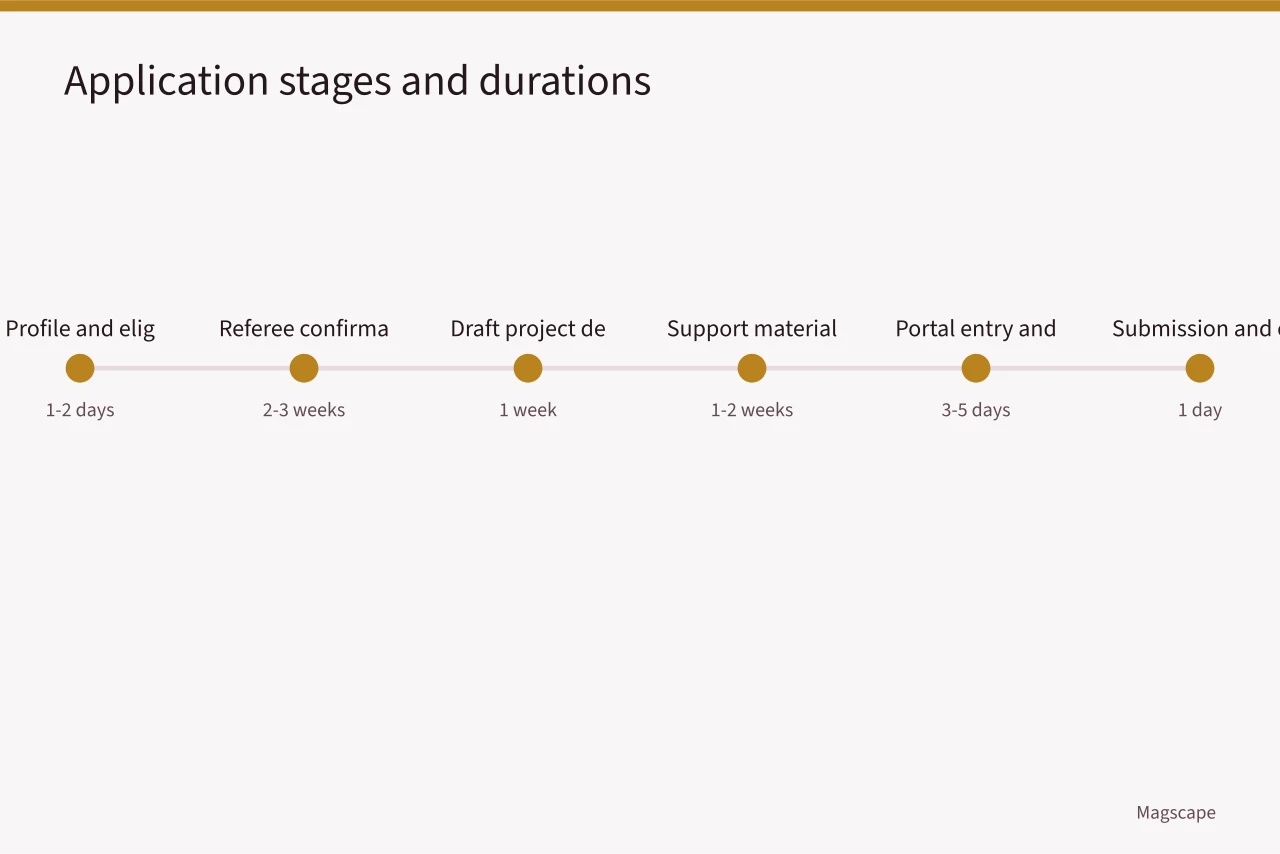
| Stage | Duration | What has to be true first |
|---|---|---|
| Profile and eligibility check | 1-2 days | You hold Canadian status proof and a working email address |
| Referee confirmation | 2-3 weeks | Two referees have read the draft and agreed to submit |
| Draft project description | 1 week | One specific project, not several competing ideas |
| Support material preparation | 1-2 weeks | A polished writing sample and current CV are ready |
| Portal entry and review | 3-5 days | All mandatory fields are complete, including referee contacts |
| Submission and confirmation | 1 day | The provincial deadline has not passed |
For a project that includes live criticism, a separate method for a performance review can sharpen the writing sample.
What has to exist before what
Before you can open the Research and Creation form, a Canada Council profile with valid status documents must be active. The portal will not show the component otherwise. Two referees must exist before submission; the form stays in draft without them. A current CV must exist before the support material section can be marked complete.
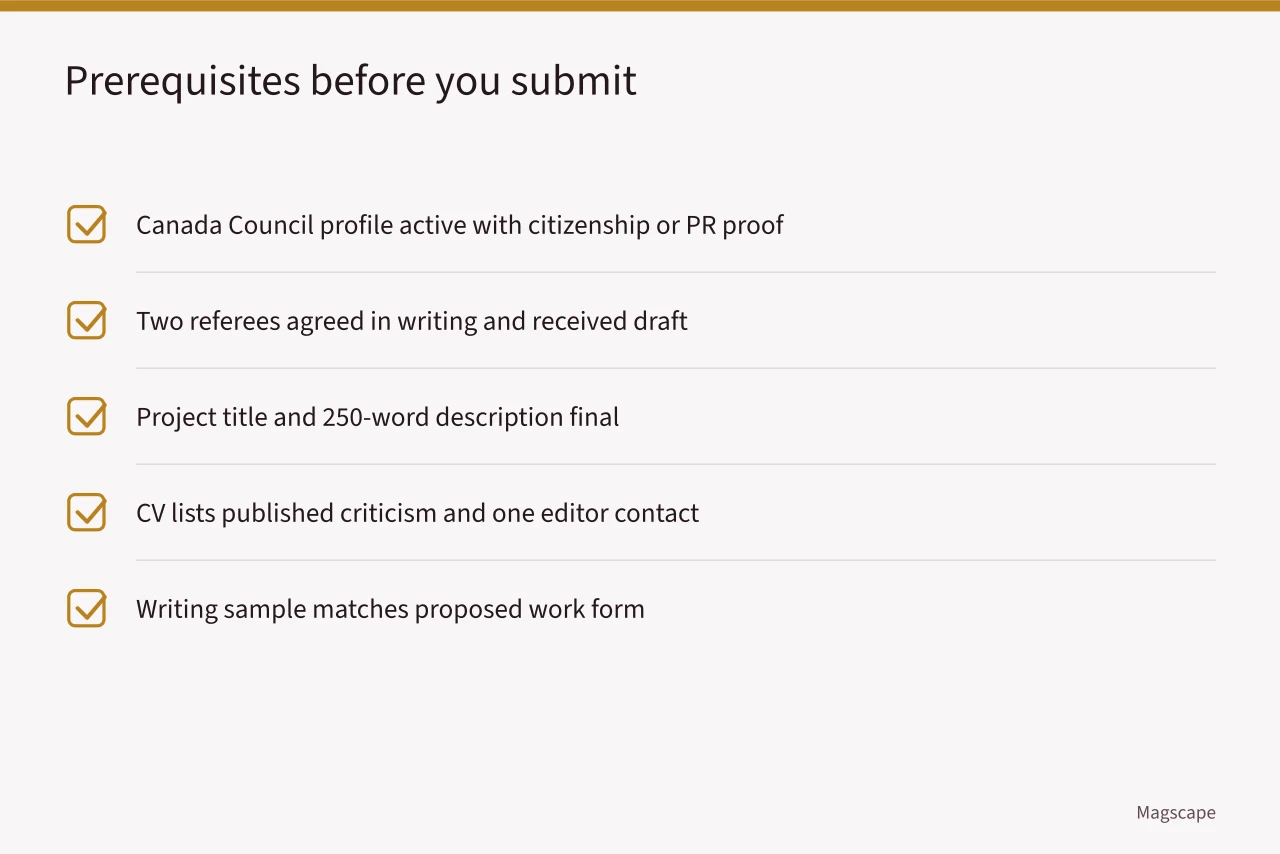
Use this checklist:
Canada Council profile: active status, citizenship or PR proof.
Two referees agreed in writing and received the draft.
Project title and 250-word description are final.
CV lists published criticism and at least one editor contact.
Writing sample matches the proposed work's form.
For object-based criticism, learn how to verify a painting's provenance before you publish a review; that research method can be named in the project description.
Where it stalls
The most common stall is the missing-referee stall. Its cause: a writer asks a referee who has not read the proposed work, and that person cannot speak to the project's form. The portal will not accept the submission until two referees have confirmed. Another stall happens when the writing sample is an exhibition PDF rather than a piece of sustained critical writing. Fix both before the deadline.
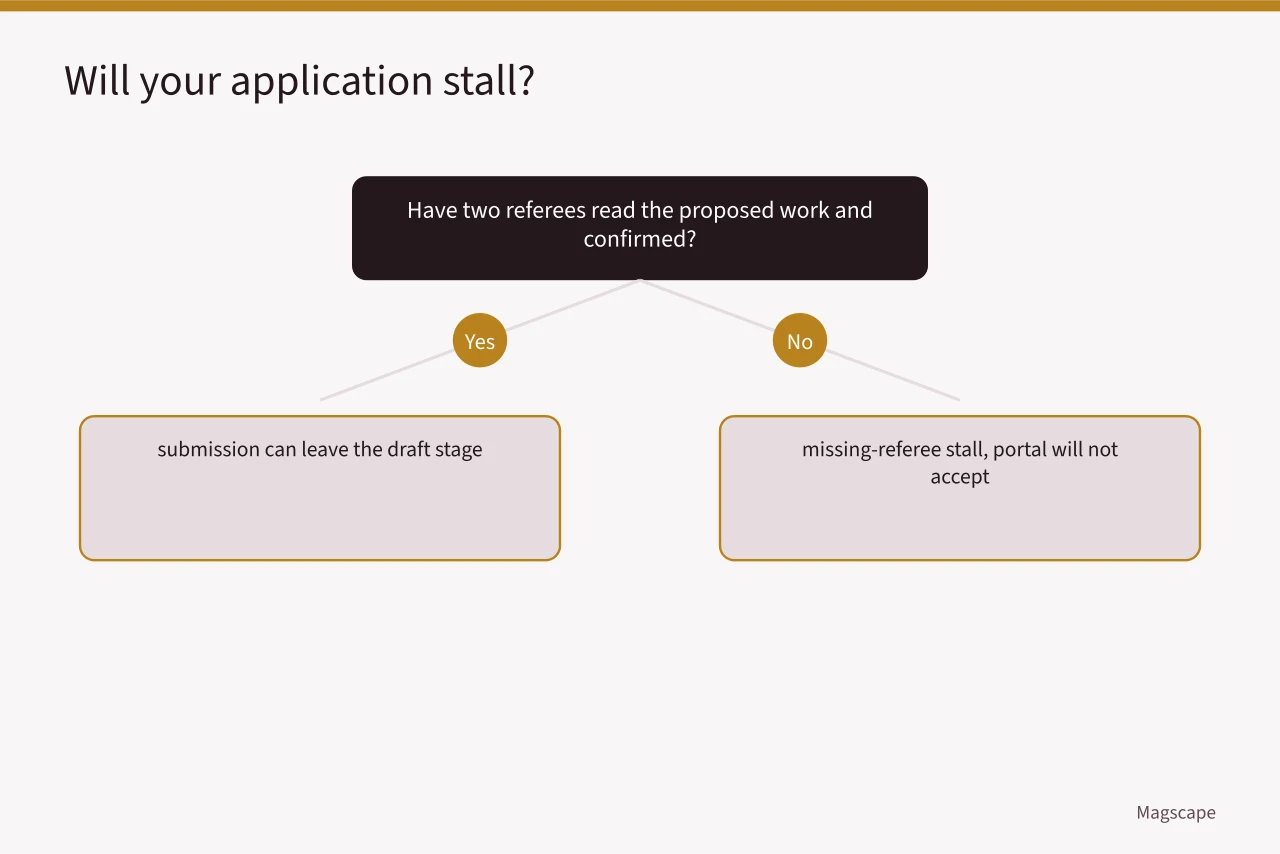
Start the referee request before the project description. If a referee has not read the proposal, the application cannot leave the draft stage.
Example: A six-week workback
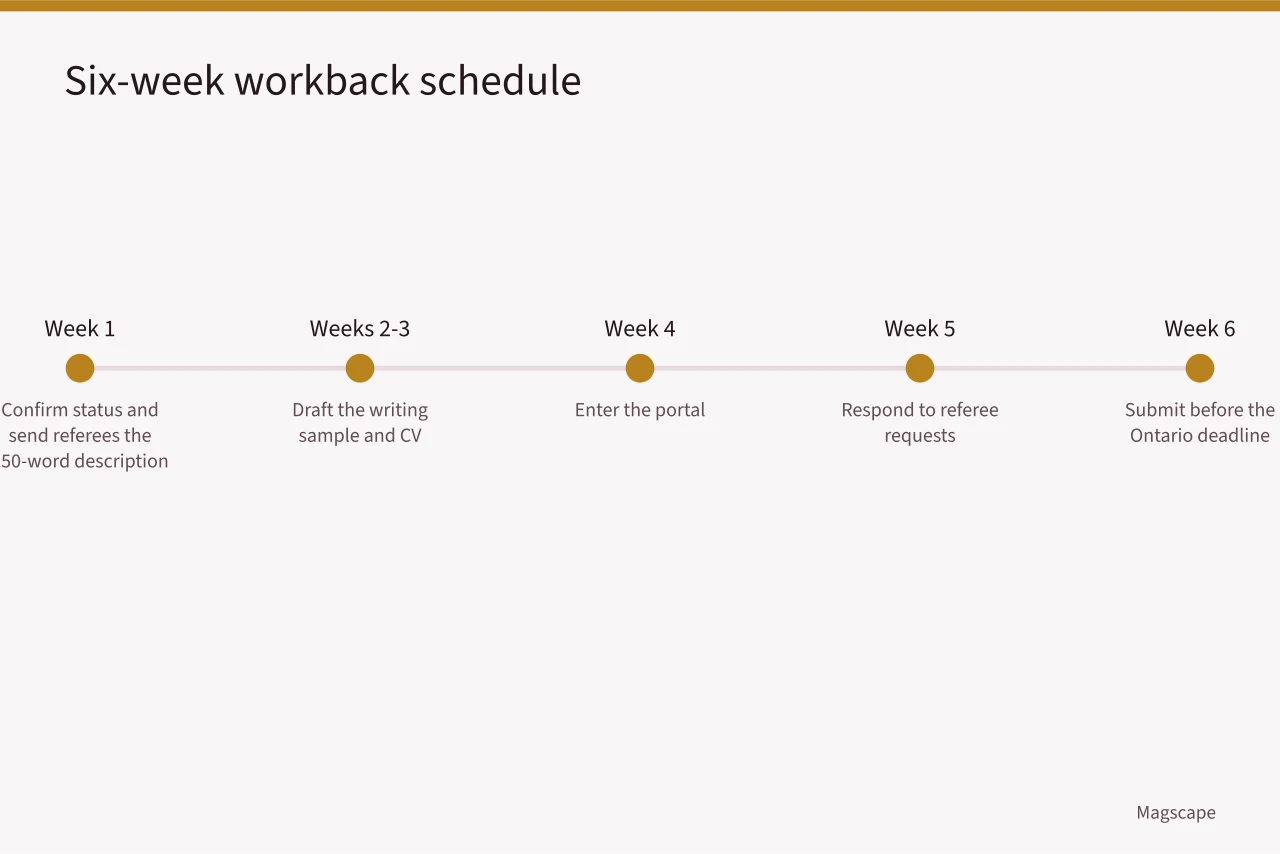
A Toronto arts writer with a proposal for a series on public art starts on the day the portal opens. Week 1: confirm status and send two referees the 250-word description. Weeks 2-3: draft the writing sample and CV. Week 4: enter the portal. Week 5: respond to referee requests. Week 6: submit before the Ontario deadline. Each stage has a duration; none can be skipped.
What to do while waiting
After submission, expect an assessment window of about three to four months. Use that time to compare public funding models. For a UK comparison, read how Arts Council England, Creative Scotland and the Arts Council of Wales fund the arts. Their application logic differs, but the principle of naming referees early still holds. Provincial arts councils sometimes run complementary deadlines; check your province's .ca page for a secondary date, but the Canada Council application remains the primary one.
Keep a file of every published piece from the last three years, including dates and outlets. It becomes the base for your next CV update and for any provisional acceptance letter you may need to show a host venue. Many Canadian artist-run centres commission essays and reviews.
The artist-run centre model is described on its public reference page. To strengthen your next application, ask a current editor for a short note on your work.
Common questions
Do I need a Canadian publisher before I apply? No. The Research and Creation component funds the research and writing work itself; a publisher is not a prerequisite, though a supporting editor's note can help.
What counts as a referee? A referee is a professional who knows your critical writing, such as an editor, curator or senior writer. They must agree to submit a reference through the portal.
Can I apply as a freelance arts writer with no institutional affiliation? Yes. Independent arts writers can apply if they hold Canadian citizenship, permanent residency or protected person status and meet the component's artistic eligibility.
How long after the deadline will I hear back? Assessment usually takes three to four months, though some peer review rounds run longer. The portal shows the current status.