Guides
Part of Architecture, craft, and design reporting guide
How to analyze a building or designed object
How to analyze a building or designed object by fixing its identity, observing form and joins, testing use, and separating observation from inference.
What to take away
- Fix identity, version, location and viewing conditions before you interpret anything.
- Write a neutral inventory before you name a style, a quality or an intention.
- Keep observation, inference, maker testimony and documentary fact in separate notes.
- Test claimed function against handling, movement, maintenance and access.
- Mark every date, technique and attribution as observed, documented, reported, inferred or unknown.
Here are the items:
- a room
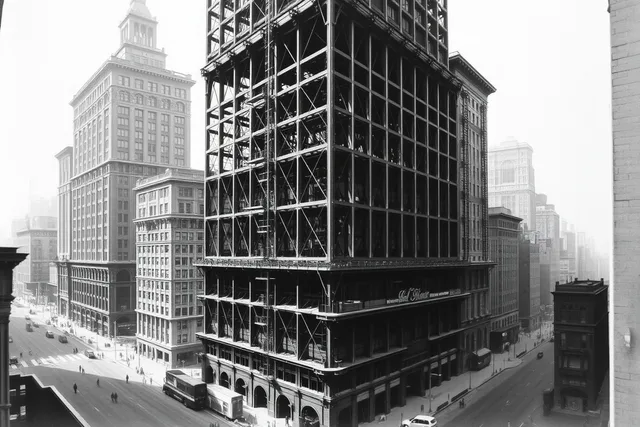
- a building
- a tool
- a vessel
- a chair
- a textile
- a piece of jewelry
- a manufactured product Scale changes the route, not the reporting logic. Follow this process: identify, observe, question, verify, compare and judge.
Photo and credit
The photograph shows one workshop arrangement at one moment. It cannot establish every step used to make the vessels on the shelves behind him.
Step 1: establish identity
Record these details for the work:
Identity facts to record
- Displayed title and common title
- Maker and collaborators
- Date or date range
- Place and dimensions
- Materials as cataloged
- Model or edition
- Owner and current location
Then decide what you are actually looking at. An original, a replica, a restoration, and a later production run each support different claims. A prototype, a digital model, and a partial reconstruction each support different claims.
For a building, list the areas you entered and the time and weather. For an object, state whether you handled it, saw it through glass, or worked only from photographs.
Step 2: make a neutral inventory
Write for five minutes without naming a style, a quality, symbolism or intention. Record what is measurable and observable:
Neutral inventory checklist
- Shape, scale, proportion, color, texture, weight, sound
- Parts, layers, edges, openings, joints, fasteners, seams, supports
- Tooling, manufacture, repair, replacement, wear, residue
- Routes, grips, controls, sight lines, contact points, barriers
- Labels, stamps, serial numbers, inscriptions, later markings
This inventory keeps a first impression from controlling the whole article. It also gives an editor concrete details to check.
Step 3: map construction and sequence
Ask how parts meet and in what order the work might have happened. A thrown ceramic form may later be trimmed, joined, decorated, glazed and fired.
Ceramic making sequence
- Thrown form
- Trimmed
- Joined
- Decorated
- Glazed
- Fired
The V&A's essay on risk in ceramics shows why order matters. Clay can be reclaimed and reworked until it enters the kiln, where an irreversible change makes it ceramic. A salt glaze can hold traces of making, occasionally a fingerprint, on the surface. A building moves from brief and design through approvals, fabrication, construction, occupation, repair and alteration.
Do not present a plausible sequence as a confirmed one. Mark it as an inference until a maker, a process record, a drawing, a condition report or a qualified specialist confirms it.
Step 4: test use
Watch what the work asks a body to do. Does a handle fit a grip? Does a chair support several postures? Can a visitor find the entrance? Where does water drain, light fall, sound gather, dirt accumulate? Record successful use and friction.
Separate intended function from documented use. A ceremonial vessel, a display chair or a converted warehouse may carry a present role far from its first purpose.
The Library of Congress illustrated guide to material culture describes the field. It covers how objects are designed, made and used. It covers what they mean to makers and users. It also covers how materials, form, decoration, time and place vary. That range guards against reducing an object to its appearance.
Step 5: add setting and history
Study the immediate context. What sits beside the object? Which neighborhood, terrain, display case, domestic room, workshop or retail system frames it? Has relocation changed how it is seen or used?
Build a time line with firm dates, approximate dates and gaps marked apart. Lead-in of at most 15 words:
- Design:
- Fabrication:
- Sale:
- Installation:
- Ownership:
- Repair:
- Exhibition:
- Relocation:
- Adaptation:
- Current condition:
Step 6: interview across roles
Ask designers about constraints and choices, fabricators about tolerances and sequence, conservators about condition, users about operation, maintenance workers about failure and repair. No single participant necessarily knows the whole work.
Open with "What happens here?" and "What changed during production?" Then follow with checks tied to evidence. Ask permission before handling, opening, moving or photographing a vulnerable object.
Step 7: organize the argument
Choose a claim narrow enough to prove. One workable structure:
- Identify the work and the encounter.
- Describe the feature that drives the analysis.
- Show how material and construction support it.
- Test it through use and setting.
- Add history or maker testimony that changes the reading.
- State the judgment and its limits.
Avoid a tour that lists features without explaining relationships. The reader should finish knowing why the sequence of rooms matters, why a joint changes the feel of a chair, or why repeated repair has become part of an object's meaning.
Step 8: run the uncertainty check
Underline every material, technique, date, intention, influence and attribution. Classify each as observed, documented, reported, inferred or unknown. Rewrite any sentence whose confidence runs past its support.
Common questions
Can I touch an object to analyze it?
Only with the owner's or custodian's permission and their handling guidance. Handling rules vary by institution and by material, so confirm them with the custodian before you arrive.
How long should observation take?
Long enough to move past the first impression. Two or more passes at different distances usually reveal more than one continuous look.
What if the maker disputes my interpretation?
Check the factual points and represent the response fairly. A maker's stated intention informs criticism but does not dictate the critic's judgment.
Can wear be called damage?
Not automatically. Wear, patina, defect, active deterioration and a deliberate finish each need different evidence, and a conservator's condition report is the place to look for it.