Features
Part of Theater, dance, and performance reporting guide
Fictional case: correcting an understudy credit
Understudy credit correction case covering cast verification, performance records, revised acting analysis, updated captions, syndication, and future checks.
What to take away
- Verify the cast for the performance attended, not the production's default roster.
- Preserve inserts, lobby notices, announcements, and responsible confirmation.
- Correct both the performer's name and any analysis attached to the wrong person.
- Do not disclose private reasons for an absence when the public cast fact is enough.
- Keep the dated review distinct from later performances with another cast.
This fictional case uses an invented production, theater, performers, critic, and publication. The real sources support cast-change documentation, not the invented events.
The published mistake
Magscape reviews the fictional Harbor Room production of The Bellmaker. The program lists Jules Avery as Mara. A small lobby card says understudy Ren Ortiz will play Mara, but the critic does not see it. The pre-show announcement is masked by late seating near the critic's row.
The review praises "Avery's long final silence" and uses a supplied rehearsal photograph of Avery. Ortiz contacts the editor after publication and identifies themself as the performer reviewed.
Confirm the performance cast
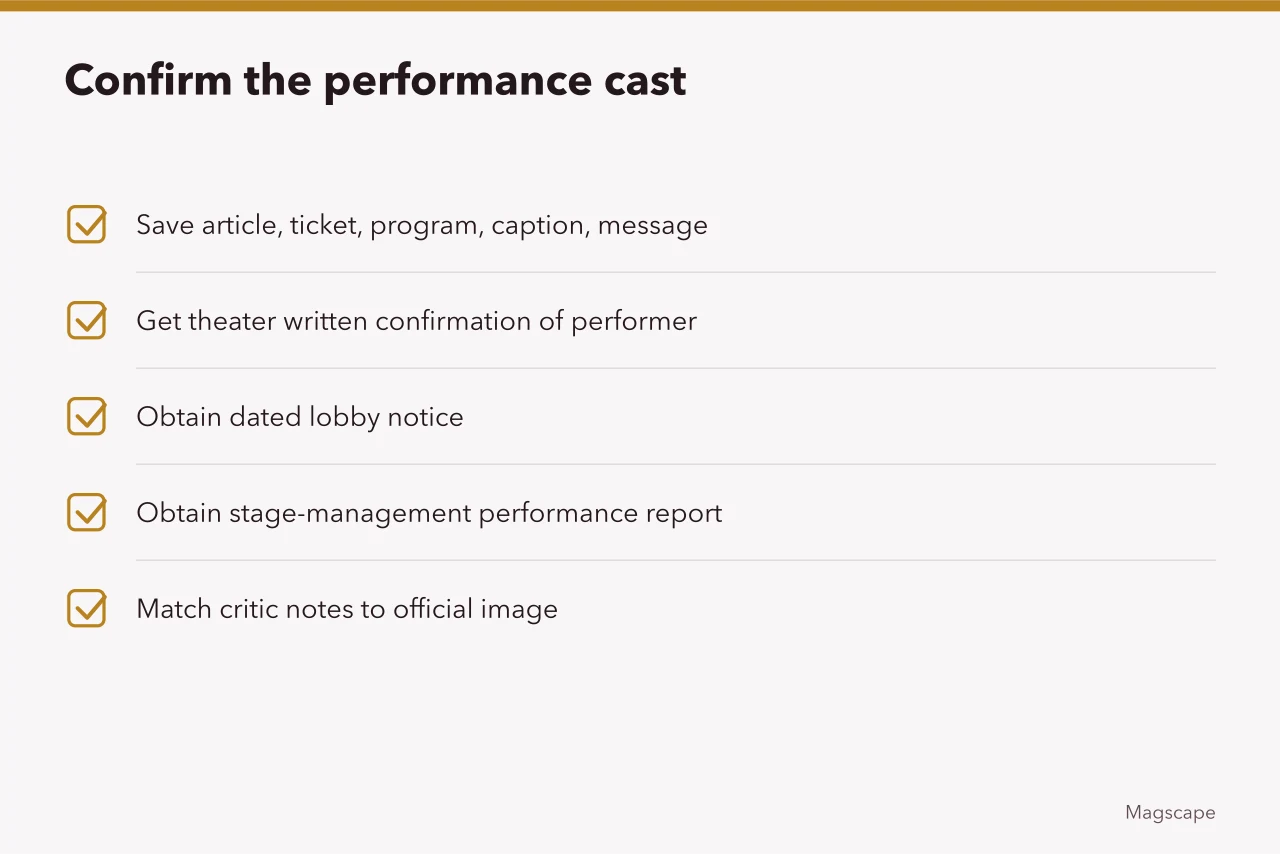
The editor saves the article, ticket, program, photo caption, and Ortiz's message. The theater confirms in writing that Ortiz performed Mara for the full reviewed performance. It provides the dated lobby notice and stage-management performance report. The critic checks notes and confirms that the person onstage matches Ortiz's official production image.
A University of Washington drama stage management manual tells the stage manager to send a performance report after every single performance. When illness threatens a show, the manager follows the production office's plan to prepare understudies or another actor to go on.
The manual governs one university theater, not the fictional company. It shows why the desk should request performance-specific records instead of relying on one main program.
Protect private information
The editor asks only what is needed: who performed, which role, for how much of the show, and how the change was announced. The theater says Avery was unavailable but does not provide a reason. The review does not speculate about health, discipline, contracts, or personal circumstances.
Ortiz shares that they had rehearsed the role and received the usual call. The correction does not frame the performance as an emergency rescue unless evidence supports that description.
Revise the criticism
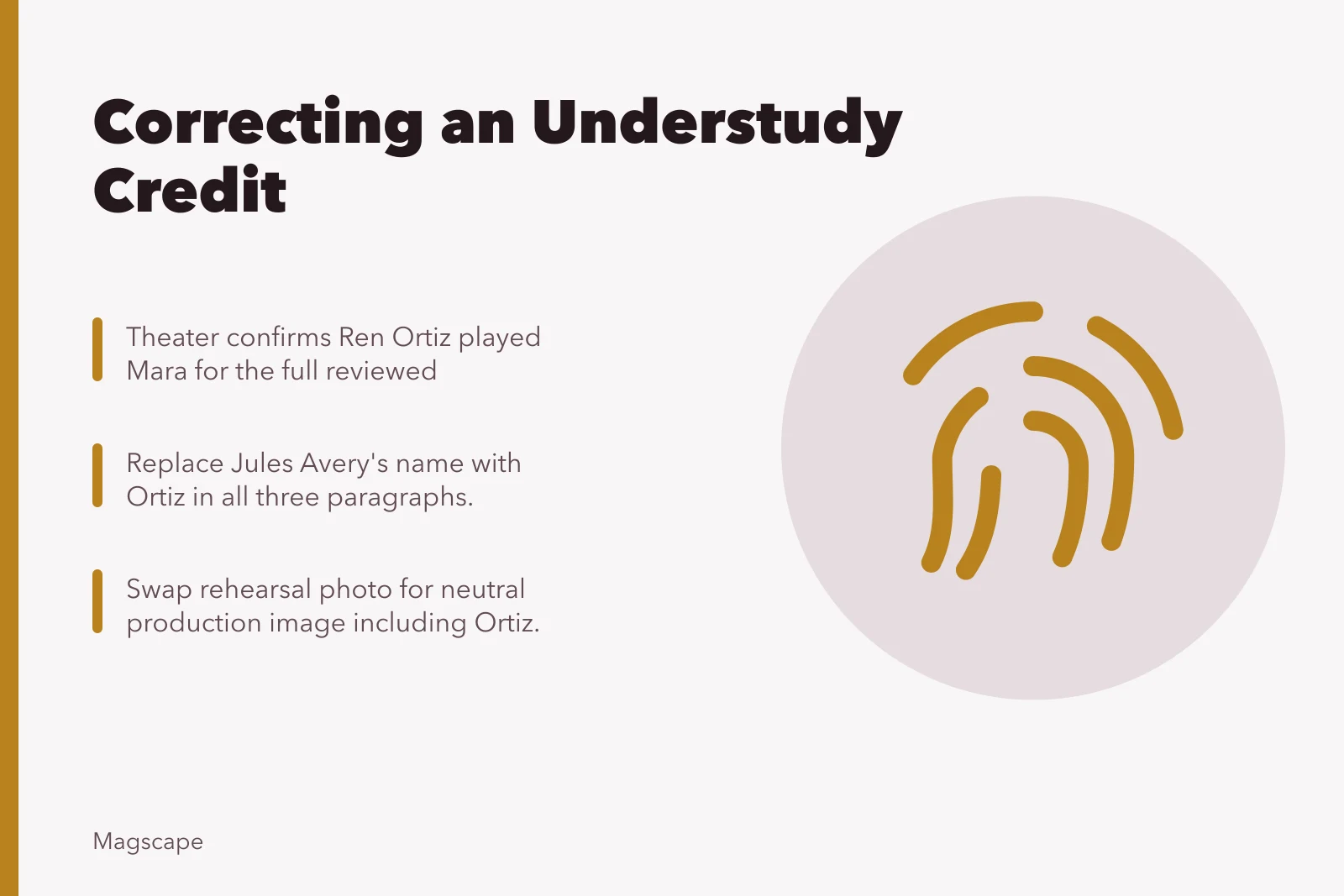
The wrong name affects more than a metadata field. Three paragraphs attribute voice, timing, and physical choices to Avery. The editor replaces the name with Ortiz and checks every pronoun and role reference. The critical judgment remains because it describes the performance Ortiz gave.
The rehearsal photograph cannot remain beside the review without clear context. The publication replaces it with a neutral production image that includes Ortiz and corrects syndication captions.
Historical programs sometimes preserve the announced cast along with changes. The Library of Congress finding aid for the Louis Monchick Collection of Theater and Dance Programs says the collection contains programs and playbills plus ancillary cast-change notices and promotional flyers. That distinction matters: a main program and its inserted notice can document different layers of one event record.
Publish a complete correction
The note reads:
Correction: An earlier version identified Jules Avery as Mara in the June 8 performance of The Bellmaker. Understudy Ren Ortiz performed the role for the full performance reviewed. References to the acting and the accompanying image caption have been corrected.
The note identifies the date, false statement, correct performer, extent, and remedy. It does not call Ortiz a replacement in a way that diminishes the work.
Repair the desk process
The theater desk adds a performance-cast check:
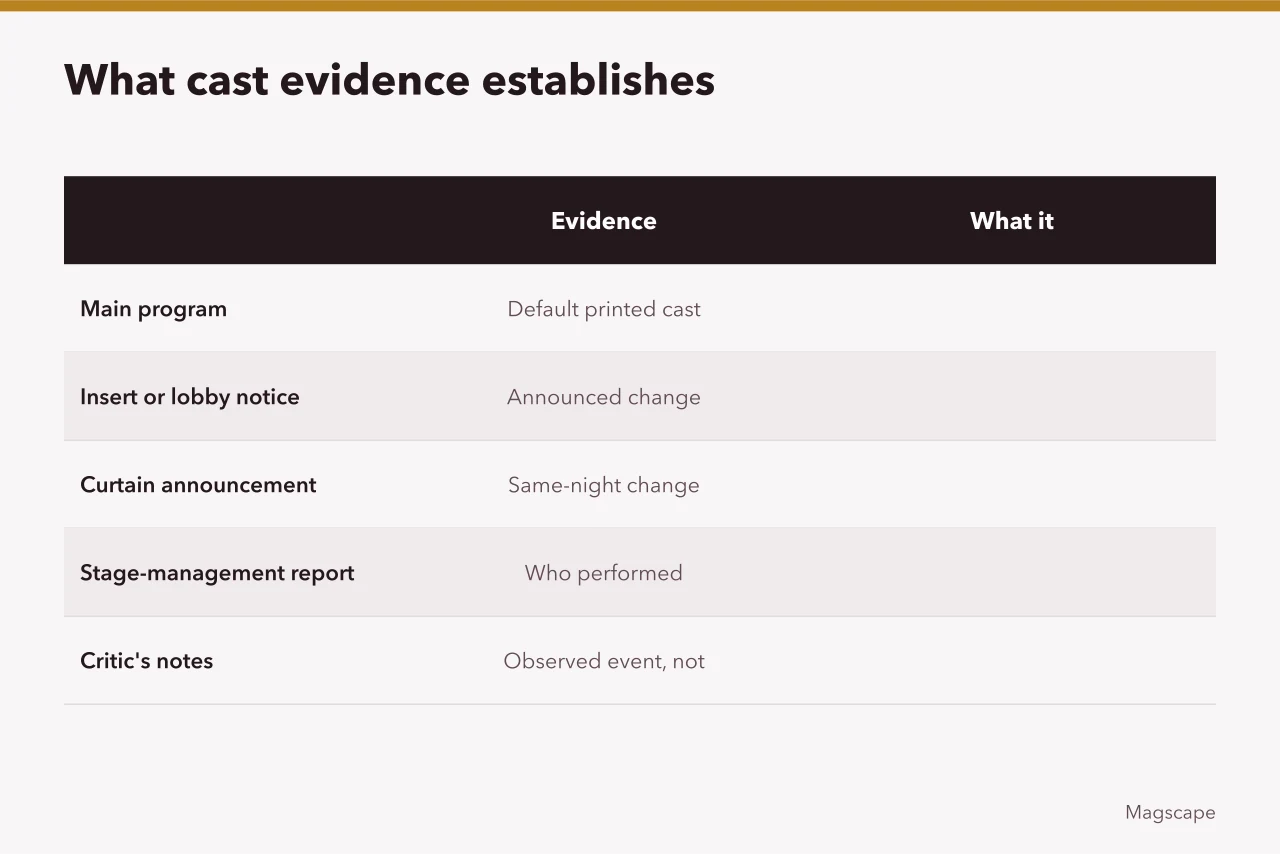
Before filing, critics photograph or transcribe notices where permitted and ask the press contact to confirm cast changes. Editors check supplied image dates and subjects separately from article text.
Common questions
Is the critic required to compare Ortiz with Avery?
No. The critic did not see Avery in the role and should review Ortiz's performance on its own terms.
Must the absence reason be reported?
No. Report it only when verified, relevant, and justified by public interest.
Is a wrong cast name a minor correction?
No. It misattributes an artist's work and must be corrected visibly across text, captions, and distribution copies.
What if the cast changes at intermission?
Record which performer played each portion and analyze only the work each person performed.