

Guides
Part of Theater, dance, and performance reporting guide
How to write a dance or performance review
Dance review method for logging the event, observing movement and space, finding structure, crediting collaborators, researching context, and editing judgment.
What to take away
- Record the exact program, dancers, order, date, venue, and viewing position.
- Describe movement through action, weight, rhythm, direction, level, relation, and duration.
- Look for patterns and changes instead of translating every gesture into a fixed meaning.
- Credit choreography, performance, design, music, and technical work separately.
- Check the program and cast changes while memory is fresh.
Dance criticism does not require the writer to reproduce every step. It requires attentive language for bodies moving through time and space, plus a clear argument about how the performance organizes perception.
Photo and credit
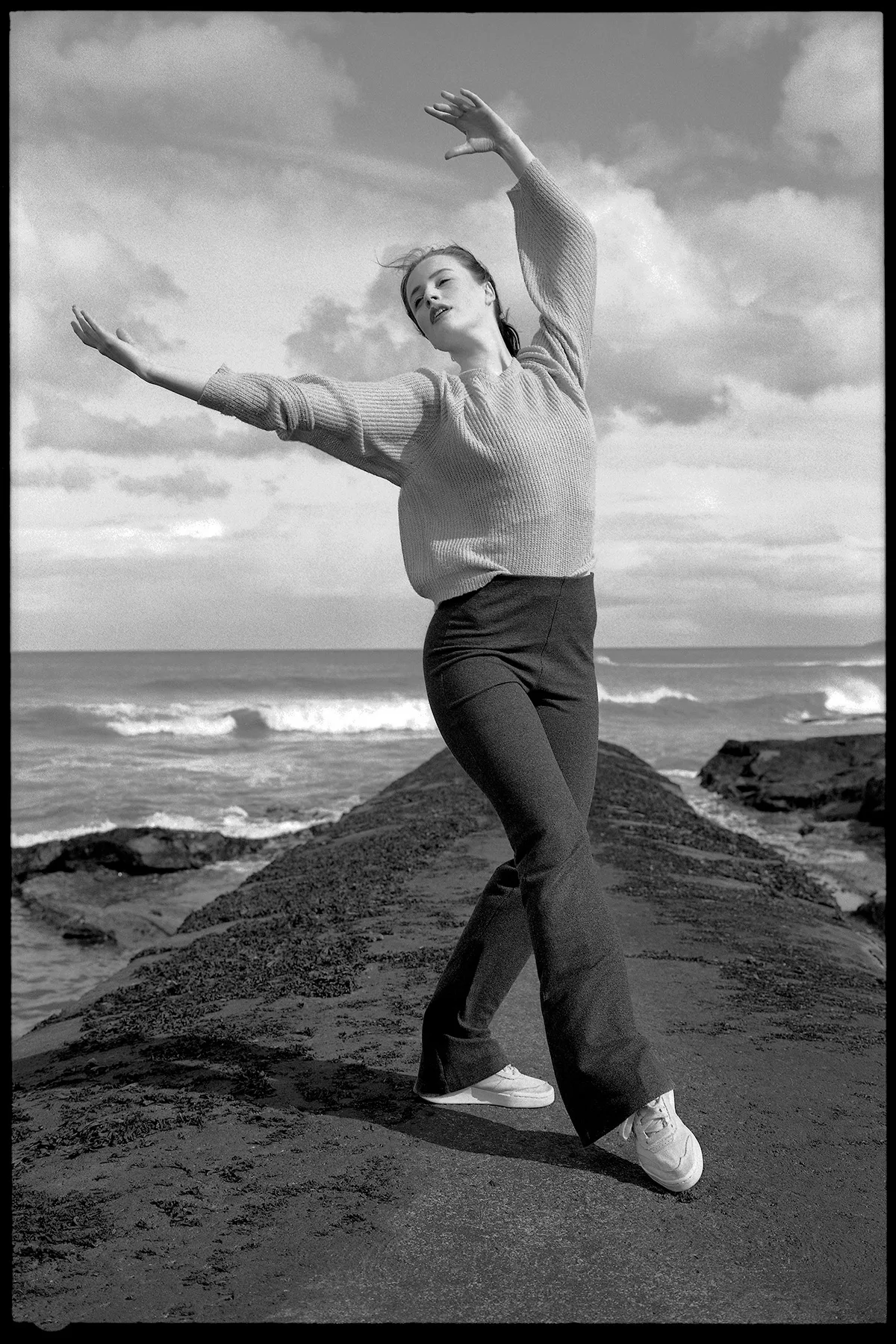
The photograph illustrates movement outside a theater and does not document the method or any reviewed work.
Step 1: Fix the event record
Copy the production and program title, company, venue, city, date, performance time, running order, choreographers, dancers, composers, musicians, designers, rehearsal directors, and other credited roles. Note replacements, program changes, interval, and your seat.
If the work is improvised, participatory, durational, or site-specific, record the portion and route you experienced. A partial view can be discussed honestly but should not be presented as a complete encounter.
Step 2: Watch for verbs
Write actions before interpretations: fold, press, suspend, drag, pivot, scatter, rebound, reach, yield. Add weight, speed, direction, level, scale, pathway, focus, and relation. Note breath, footfall, fabric, contact, and sound when audible.
The Library of Congress dance research guide points researchers to reference material, special collections, scores, databases, manuscripts, iconography, recordings, and other resources across several divisions. Historical research can clarify a form, artist, or earlier version. It should not replace observation of the event being reviewed.
Step 3: Find structure
After the performance, map its main movements:
| Question | Possible evidence |
|---|---|
| What begins the work? | Solitary action, ensemble pattern, sound, darkness, speech |
| What recurs? | Gesture, pathway, grouping, rhythm, object, image |
| What changes? | Scale, tempo, cast, orientation, rule, audience relation |
| What resists the pattern? | Stillness, error, rupture, improvisation, refusal |
| How does it end? | Closure, dispersal, repetition, interruption, continuation |
Do not force a narrative onto an abstract work. Meaning may arise through relation, sensation, procedure, history, or formal expectation.
Step 4: Analyze collaboration
Separate movement material from its performance, although the two meet in the event. Describe how music, silence, light, costume, objects, projection, architecture, and audience placement alter timing and attention. Check credits before assigning those effects.
Avoid judging technique through one tradition's standard when the work uses another practice. The V&A's ballet collection pages trace one such lineage from seventeenth-century court dance through romantic, classical, and contemporary productions; other practices carry their own histories and criteria. Research vocabulary and lineage, and state the criterion behind the judgment.
Step 5: Select decisive moments
Choose three or four moments that build the argument. Preserve sequence and relationship. A lifted arm matters differently after ten minutes of low, folded movement than it does as an isolated photograph.
Use sensory language carefully. Metaphor should grow from visible action. "The group moves like a tide" needs evidence in repeated advance, retreat, accumulation, and release.
Step 6: Add context with limits
Read the program after recording first impressions. Check the choreographer's statement, source material, premiere date, commissions, restaging, music, and company history. Treat program interpretations as claims rather than instructions for what you must see.
When discussing identity, tradition, disability, ritual, or community practice, use informed sources and avoid treating a body as a symbol before treating the performer as an artist.
Step 7: Draft and verify
Open with a movement problem or relation that carries the review. Orient the reader to form and conditions, then move among description, interpretation, context, and evaluation. Summary of program order should not become the whole article.
Check names, pronouns, piece order, roles, music, quotations, dates, and cast changes. Mark what was observed and what came from the program or interview.
Common questions
Must a dance critic know technique names?
No. Accurate observation and research matter more than unsupported terminology.
Can a review interpret gestures symbolically?
Yes, when the interpretation is supported by repetition, context, relation, or other evidence and is not presented as fixed fact.
Should dancers be described by body type?
Only when physical detail is relevant, respectful, and tied to the artistic argument rather than stereotype or surveillance.
Can a filmed dance be reviewed as live dance?
No. Camera, editing, framing, and recorded sound create a different viewing object that should be identified.