Guides
Architecture, craft, and design reporting guide
How to report on buildings and made objects: what to record on site, how to read drawings and archives, and how to credit the people who built the thing.
What to take away
- Name the exact building or object, its version, address, maker, client, and the date you saw it.
- Keep four kinds of evidence apartwhat you observed, what the maker says, what the archive holds, and what you conclude.
- Read a drawing for dimensions and a photograph for surface. Neither replaces the other.
- Ask who set the brief, who approved the cost, and who maintains the work now.
- Mark uncertain dates and attributions in the text, and correct confirmed errors in the body and the metadata.
A chair takes weight. A cup meets a hand. A building decides where light falls and who has to ask for a key. Reporting on designed things starts with those encounters and then checks the history and the labor behind them.
Photo and credit
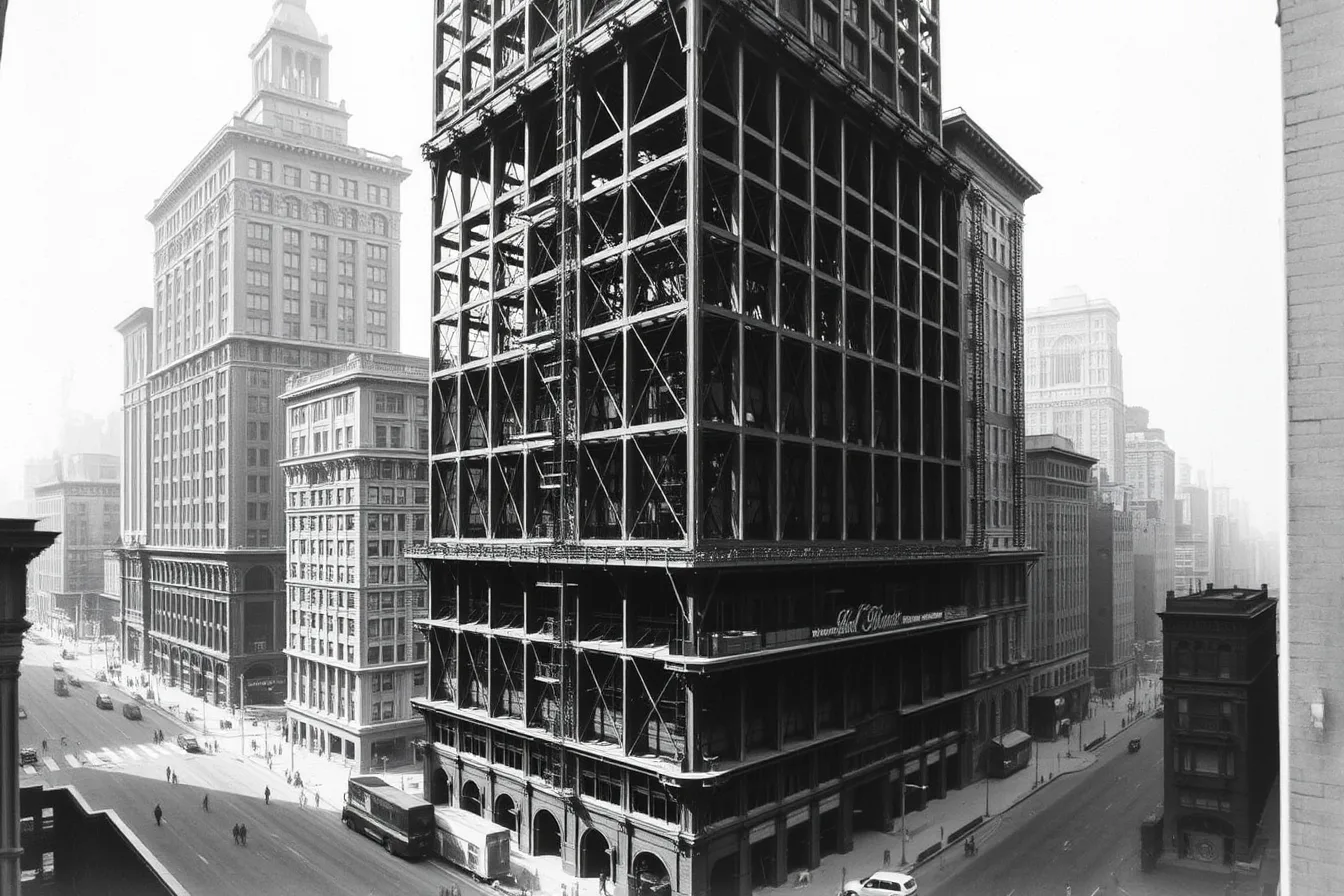
The photograph shows one construction stage of the Flatiron Building in New York City, taken in 1902. It is not evidence of how the finished building looks today or how it performs.
Define the object of coverage
Decide first what you are covering. It might be a finished building, a renovation, a proposal, or an interior. It might be a grounds scheme, a product, a handmade object, or an exhibition. It might be a policy.
For a product, record the model and the version. For a building, record the address, the date you visited, the areas you entered, and any space that was closed to you.
Do not slide between a design proposal and a finished result. A rendering shows an intended view. A construction photograph shows a stage. A press release states one party's position. A visit records conditions on one day.
Build a factual record
Ask for the credits before you ask for an opinion. Get the maker or design team, the client, the fabricator, the engineer, and the contractor. Add the craft workers, the grounds designers, the consultants, and the completion date.
Then pin down the alteration dates and the commission terms. Ask which credits apply to the whole project and which apply to a single phase.
For an object, photograph the marks, labels, joins, and fasteners. Also photograph repairs where permission allows. Include the underside, the packaging, and a scale reference in the same frame.
For a building, work from the street inward. Record the approach, the massing, the entrances, and the circulation. Then the structure, the envelope, the interior sequence, the services, and the signs. Note the furniture, the grounds, and the neighboring buildings.
Read from distance to detail
Start with the setting and the overall form. Move to openings, surfaces, and connections. Then look for wear and follow the interior sequence. Note how the work changes with position, weather, light, sound, and crowding.
| Scale | Questions |
|---|---|
| Setting | What surrounds the work, and what routes lead to it? |
| Form | How are mass, proportion, balance, rhythm, and hierarchy organized? |
| Material | What is visible, concealed, coated, joined, repaired, or replaced? |
| Use | Who can enter, hold, operate, maintain, or alter it? |
| Time | What has weathered, failed, adapted, or gained meaning? |
Describe before judging. "The entrance is confusing" becomes testable when the account names two unsigned doors, a recessed accessible route, and a reception desk hidden beyond a turn.
Use records without flattening the work
The Library of Congress HABS, HAER, and HALS collection description explains its surveys. They combine several materials to document buildings, engineering works, and landscapes:
- measured drawings
- large-format photographs
- written histories
- captions
- supporting materials
Each format answers a different question. A drawing can show dimensions and relationships that a street photograph cannot.
A photograph can preserve surface conditions that a plan leaves out.
Compare drawings against built evidence. Label unbuilt schemes, later revisions, and reconstructed elements. Mark any date you cannot confirm. Ask whether the archive describes the original work, a renovation, or a later record of both.
Report labor and decisions
Design is collaborative. Find out who set the brief and who approved the costs. Find out who developed the structure and who chose the materials. Find out who fabricated the parts and who maintains the work today. Attribute each statement to the person qualified to make it.
For craft, keep the process specific. Name a technique only after the maker confirms it, or after reliable documentation, or after qualified examination. Similar tool marks can result from different sequences. Surface color proves no alloy, glaze, wood species, or finish.
The Getty Conservation Institute's materials characterization program exists. Full identification of lacquers, plastics, paints, waxes, and wood takes studied analytical protocols. It does not take a glance.
Include use, access, and maintenance
Watch the work in service. Ask users about these topics:
- comfort
- navigation
- durability
- repair
- noise
- storage
- cleaning Treat those accounts as experience, not as a representative survey, unless your method supports that claim.
Check access feature by feature. Consider step-free routes, door operation, seating, and reach. Also consider signage, lighting, acoustics, and restrooms. Then consider sensory conditions. Do not call a place accessible after checking only the entrance. The venue's own published access statement and the relevant licensing authority are the sources that carry weight.
Edit judgment against evidence
Every conclusion needs a visible, audible, tactile, documentary, or reported basis. Separate taste from failure. A rough surface may be intentional. A loose connection is still a condition worth checking. A compact plan can be elegant for one use and restrictive for another.
Before publication, verify the spelling, the roles, the dates, and the addresses. Check the dimensions, the materials, and the ownership. Check the quotations, the access claims, the alteration history, and the image captions. Correct errors in both the body and the metadata.
Common questions
Must an architecture critic visit the building?
A visit is preferred for any review of lived conditions. If access is impossible, label the piece as analysis of plans, images, records, or proposals. Say so near the top.
Can a product photograph prove its material?
No. Appearance may suggest a material, but reliable identification needs documentation or qualified examination. Say what the surface looks like and stop there.
Should a craft profile explain every technical step?
Only the steps your reporting can verify and the maker is willing to discuss. A named technique you cannot confirm is a correction waiting to happen.
Is a building's original design more important than its later use?
Not automatically. Original intent, alteration, maintenance, and present use answer different questions, and a review should say which one it is answering.