Guides
Music reporting and criticism: a practical guide
Music reporting and criticism: review recordings and concerts, verify credits, charts and rights, and correct errors with practical steps and named sources.
What to take away
Music reporting and criticism begins with a specific object, evidence, and a clear correction plan.
- Name the exact recording or performanceedition, venue, date, and the conditions you heard it under.
- Describe the musical choice before you reach a verdict; a verdict without a moment behind it is opinion.
- Keep the song, the recording, and the people who made each one separate in your notes and in print.
- Check chart, sales and streaming claims against the body that publishes them, never against a press release.
- Correct a wrong credit or set-list claim on the page, with the date, rather than quietly editing it away.
Set the object before you listen
A music beat covers many things:
Pick your object first
What are you covering?
Single, album, score, tour, scene, studio, archive, dispute
Evidence differs for each object
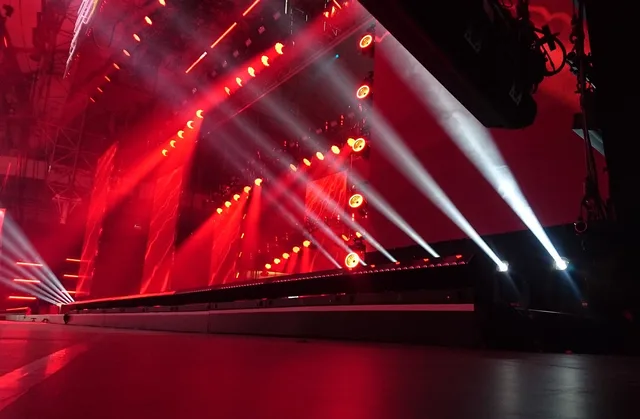
A studio album cannot tell you how the songs hold up in a room. A gig review records one night, in one acoustic and technical setup, in front of one crowd. Both are legitimate, and neither substitutes for the other.
Music writing takes several forms, and each carries its own burden of proof. The differences between a review, a report and a feature decide what you may claim and what you must attribute.
Log the recording or the gig
For a release, write down artist credit, title, release date, and label or self-release. Also note format, edition, track order, and runtime. Note the platform or medium you used, because a spatial-audio mix and a phone speaker are different objects.
Log release or gig details
- Artist credit, title, release date, label
- Format, edition, track order, runtime
- Platform or medium used
- Billed artists, venue, city, date
- Scheduled and actual start times
- Set length, support acts, your position
- Technical failures witnessed
Deluxe editions, remasters, alternate mixes, clean versions and regional track lists all count as separate versions. Say which one you heard, or a reader who heard another will think you got it wrong.
For a performance, record billed artists, venue, city, and date. Note scheduled and actual start times, set length, and support acts. Also note your position in the room. Record any technical failure you witnessed. A step-by-step method for reviewing a concert keeps those details from drifting once you start drafting.
- Before the set, record the billed artists, venue, city, date, and your position in the room.
- During the performance, note start and end times, songs you can identify, transitions, standout musical choices, crowd observations, and technical problems; mark uncertain details.
- Immediately after, separate what you observed from what you infer, and flag details that need confirmation.
- Verify set-list and credit claims against venue or artist records and recordings; ask the venue or sound engineer about technical problems before assigning blame.
- Draft around specific moments, distinguish the performance from the room's conditions, then check names, dates, songs, and any quoted claim before publication.
Treat a set list as a lead, not as evidence. Compare it with what you heard, and with recordings or confirmation from the venue or artist, before you print it as fact.
Listen in layers
Listen in layers
- First passhear the work as a whole
- Follow rhythm, melody, harmony, texture
- Follow timbre, dynamics, phrasing, form
- Follow lyrics and arrangement
- Test vocabularycan a reader imagine the sound?
| Moment | Observable choice | Effect | What to check |
|---|---|---|---|
| Opening | Dry voice enters before the instruments | Pulls the listener close | Is the voice double-tracked later? |
| Transition | Drums drop for two bars | Suspends forward motion | Does the live arrangement keep the break? |
| Final chorus | Harmony widens, bass rises | Raises scale without a faster tempo | Who arranged and who mixed it? |
Volume is not intensity, and technical complexity is not expressive depth. Say what changes, and say why that change matters inside this particular piece.
Credit the right work
A song and a recording of that song are two different objects. The U.S. Copyright Office guidance for musicians draws the same line: the musical work and the sound recording are protected separately, and are usually owned and licensed by different people.
Song vs recording rights
Musical work
- What it is
- Music and lyrics
- Who creates
- Writers
- Protection
- Separate copyright
- Ownership
- Usually different people
- Licensing
- Separate license
Sound recording
- What it is
- Recorded performance
- Who creates
- Performers, engineers
- Protection
- Separate copyright
- Ownership
- Usually different people
- Licensing
- Separate license
Writers write the music and lyrics. Performers realize the parts. Arrangers shape the material. Producers, engineers, mixers and mastering engineers each do distinct work. Roles vary by genre, so check the supplied credits against reliable documentation rather than a streaming panel alone.
The Library of Congress Recorded Sound Research Center publishes researcher resources and collection guides for locating recordings and related papers. Discographic research resolves session dates, personnel and release history that a credit panel leaves blank. Consult Discogs, AllMusic, and MusicBrainz as finding aids, then check discrepancies against liner notes, label catalogs, session documents, or archive records. A database entry that conflicts with another database entry is a question, not an answer.
Build the argument from the sound
A review earns its verdict by connecting the claim to several moments. Calling an album repetitive proves nothing; naming the tempo range, the drum pattern, the harmonic loop and the vocal placement shows whether the repetition builds cohesion, pressure, stasis or fatigue.
To study models, read album or concert reviews in Pitchfork, Rolling Stone, and NPR Music. Mark each review's central claim, the musical or observed details used as evidence, and the context that supports its verdict; then compare that chain of evidence with your own draft.
Build argument from sound
- Connect claim to several moments
- Name tempo range, drum pattern, harmonic loop
- Note vocal placement
- Quote lyrics briefly, analyze delivery
- Check songwriter credit before autobiography
- Treat interviews as attributed accounts
With lyrics, quote briefly and analyze delivery and setting alongside the words. Do not assume the singer is the narrator. Check the songwriter credit before you read autobiography into a line, and treat interviews as attributed accounts of intention, not as proof of what a song means. In the United States, quotation questions fall under the Copyright Act (Title 17), including its fact-specific fair-use provision in section 107; a brief quotation is not automatically fair use.
Report the live event fairly
Separate the artist's choices from the room's conditions. A buried vocal can come from the mix, the venue, where you stood, or a fault that lasted one song. Write what you could hear, then ask the sound engineer or the venue before you assign blame.
Separate artist from room
Was the vocal buried?
check mix, venue, your position, fault
report what you could hear
Describe the crowd only as far as you could see it. "Several people near the sound desk left during the encore" is supportable. "The fans rejected the new material" needs far wider evidence than one night gives you.
Note access, seating, sight lines, captioning or interpretation, sound levels and entry conditions when they shaped the evening. Report what the venue publishes in its access statement; do not certify a venue's accessibility yourself. In the United States, the Americans with Disabilities Act (ADA) is a relevant federal access law, but a reviewer's observations do not establish legal compliance.
Add context with a purpose
Here is the lead-in and list:
- Research genre
- community
- language
- technology
- labor
- finance
- distribution
- ownership
- and earlier releases when they clarify the work in front of you. Genre is a set of conventions, not a rulebook, and the question is always whose account of the tradition you are repeating.
For news, verify key details at the body that publishes them. For U.S. chart claims, consult Billboard's published charts and methodology; Luminate is a music-data provider, so identify the source and reporting period behind each sales or streaming figure. For certification claims, consult the RIAA Gold & Platinum database, which reports certifications rather than every current sale or stream. For touring grosses, check Pollstar's Boxoffice reporting where a figure is available; for a particular show's ticket count, seek confirmation from the venue, promoter, or artist and attribute it. Verify capacity, cancellations, credits, samples, lawsuits, and release changes against relevant records or the responsible party. A promotional superlative is a claim. Treat it as one until you have the source.
Edit, then correct in public
Check these details before publishing:
- Check names, pronouns, titles, stylization, track order
- dates
- venues
- lineup
- instruments
- quotations
- translations
- credits
- the release version Listen again to every moment you described technically. Read the headline for claims about best, first, sold out, viral or unanimous that the body does not carry.
When a credit, a song identification or a set-list claim turns out wrong, correct it on the page and date the correction.
A later remix, a lineup change or an added date is an update, not an error, unless the article was false when it ran.
Defamation, copyright and heritage questions require jurisdiction-specific judgment; consult a qualified media lawyer. In the United States, defamation law is largely state-based and constrained by the First Amendment; the Supreme Court's New York Times Co. v. Sullivan decision sets an actual-malice standard for public-official plaintiffs. The DMCA's section 512 sets notice-and-takedown procedures, but a notice is not a court ruling.
Common questions
Must a music critic read notation?
No. The job needs attentive listening, accurate language, research skill and an honest account of your limits. Notation helps on some assignments, particularly score-based and classical work, and is not a qualification for the rest.
Is a set list proof that every song was played?
No. Treat it as a planned or recorded list and compare it with what you heard, with recordings, or with confirmation from someone responsible. Print the source of the list when it did not come from your own observation.
Can headphones be used for an album review?
Yes. State the version and the conditions whenever they affect a claim about mix, spatial audio or sound quality. A claim about a room's sound belongs to the gig, not to the record.
Should a review explain every genre term?
Explain the terms a reader needs to follow the argument, and no more. A review is not a glossary, and a term defined for its own sake pushes the actual description further down the page.
In this guide
- How to write a concert review step by stepHow to prepare, log the set, judge sound against performance, verify credits, and report a concert review fairly with a repeatable writing workflow.
- Music coverage forms compared: review, feature, interview and live reportMusic coverage forms: reviews evaluate recordings or performances; features develop reported subjects; interviews center a source; live reports document events.
- Music reporting and review fact-check checklistMusic reporting checklist for releases, tracks, credits, performances, set lists, quotations, charts, rights, samples, images, conflicts, access, and corrections.
- Common music coverage problems and practical fixesMusic coverage fixes for vague listening, wrong credits, release confusion, crowd overclaims, press-copy repetition, rights errors, and restoration myths.
- Fictional case: correcting a producer creditProducer credit correction case covering master-specific records, conflicting metadata, responsible responses, revised analysis, and a clear public note.